8 Best Places to Sell Audiobooks in 2026
Where your audiobook can earn, what each store pays, which ones take AI narration, and how to sell yours step by step.

In this article
You have a finished audiobook, or you are about to. Now you need somewhere to sell it. The best places to sell audiobooks in 2026 are Audible, Spotify, Google Play Books, Apple Books and Kobo, plus your own shop on Gumroad, Shopify or Payhip. Each one pays differently, reaches different listeners and has its own rules, especially for AI narration.
This guide compares all eight, explains how to sell on more than one at once, and walks you through selling your audiobook step by step. Every store links to a full guide of its own.
The 8 places at a glance
| Store | AI narration | What you earn | Exclusive? | How you get in |
|---|---|---|---|---|
| Audible | No, human only (Virtual Voice aside) | 50% exclusive, 30% non-exclusive | Optional, 7 years | ACX (US, UK, Canada, Ireland) |
| Spotify | Yes, with a label | 50% of your price on sales, plus a share of Premium listening | No | Spotify for Authors |
| Google Play Books | Yes, as “Synthesized voice” | Shown in your account | No | Partner Center (12 countries) |
| Apple Books | Yes, if disclosed | Depends on your distributor | No | A distributor such as PublishDrive |
| Kobo | Yes, as “Synthesized Voice” | 45% (35% under $2.99) | No | Kobo Writing Life |
| Gumroad | No rules | About 82% of a $15 sale after all fees | No | Your own product page |
| Shopify | No rules | Your price, minus plan and card fees | No | Your own store |
| Payhip | No rules | 95% to 100%, minus card fees | No | Your own store |
1. Audible
Audible is the largest audiobook store in the world, and for many listeners it is the only one they use. Indie authors publish there through ACX, Audible’s self-publishing platform, which is open to people living in the US, UK, Canada and Ireland. Your book also has to be on sale as a Kindle ebook.

What you earn: since May 2026, ACX pays 50% if you sell only through Audible and 30% if you also sell elsewhere. Audible sets the price based on length, and exclusive deals last seven years.
AI narration: not accepted. ACX says your audiobook “must be narrated by a human unless otherwise authorized”. The only AI routes are Amazon’s own: Virtual Voice, which turns some Kindle ebooks into audio (an invite-only beta in the US), and Voice Replica for narrators.
Best for: human-narrated books, especially fiction in series.
Read the full guide: How to publish an audiobook on Audible.
2. Spotify
Spotify is now one of the biggest places people listen to audiobooks, because Premium subscribers get 15 hours of audiobook listening a month in the US (12 in newer markets). You upload through Spotify for Authors, which is free, open to all authors and not exclusive.
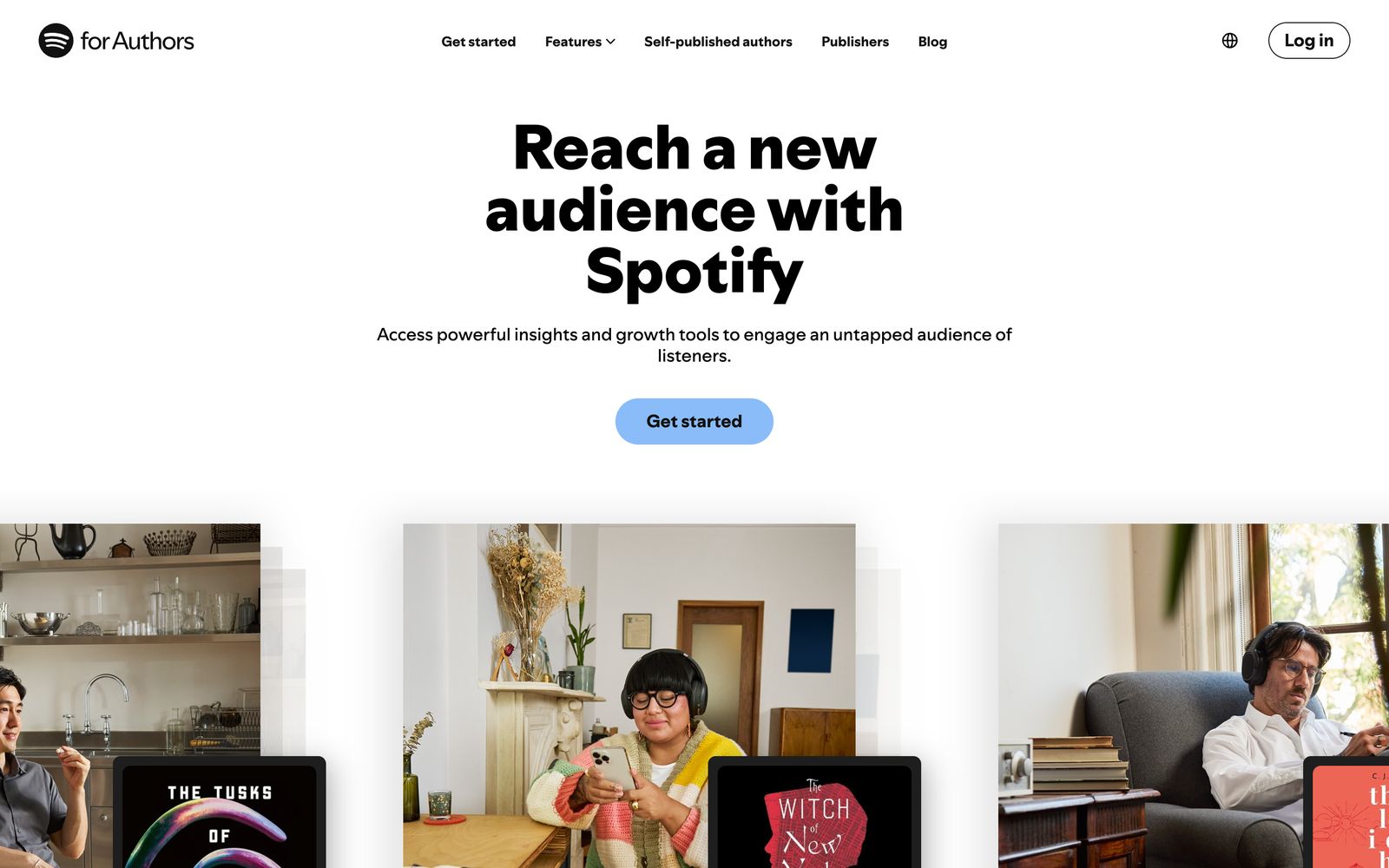
What you earn: 50% of the price you set when someone buys your book, plus a share of a pool when Premium members listen. Spotify does not publish a rate per hour.
AI narration: accepted. Tick “This audiobook uses digital voice narration” when you upload, and Spotify adds a line to your description. AI-narrated books stay on Spotify only; they are not passed on to its partner stores.
Best for: reaching younger listeners and anyone who already pays for Premium.
Read the full guide: How to publish an audiobook on Spotify.
3. Google Play Books
Google Play Books sells audiobooks on Android phones, the web and Google’s own apps. Publishers upload in the Play Books Partner Center, but direct audiobook selling is currently limited to select publishers in 12 countries, including the US, UK, Canada and Australia.
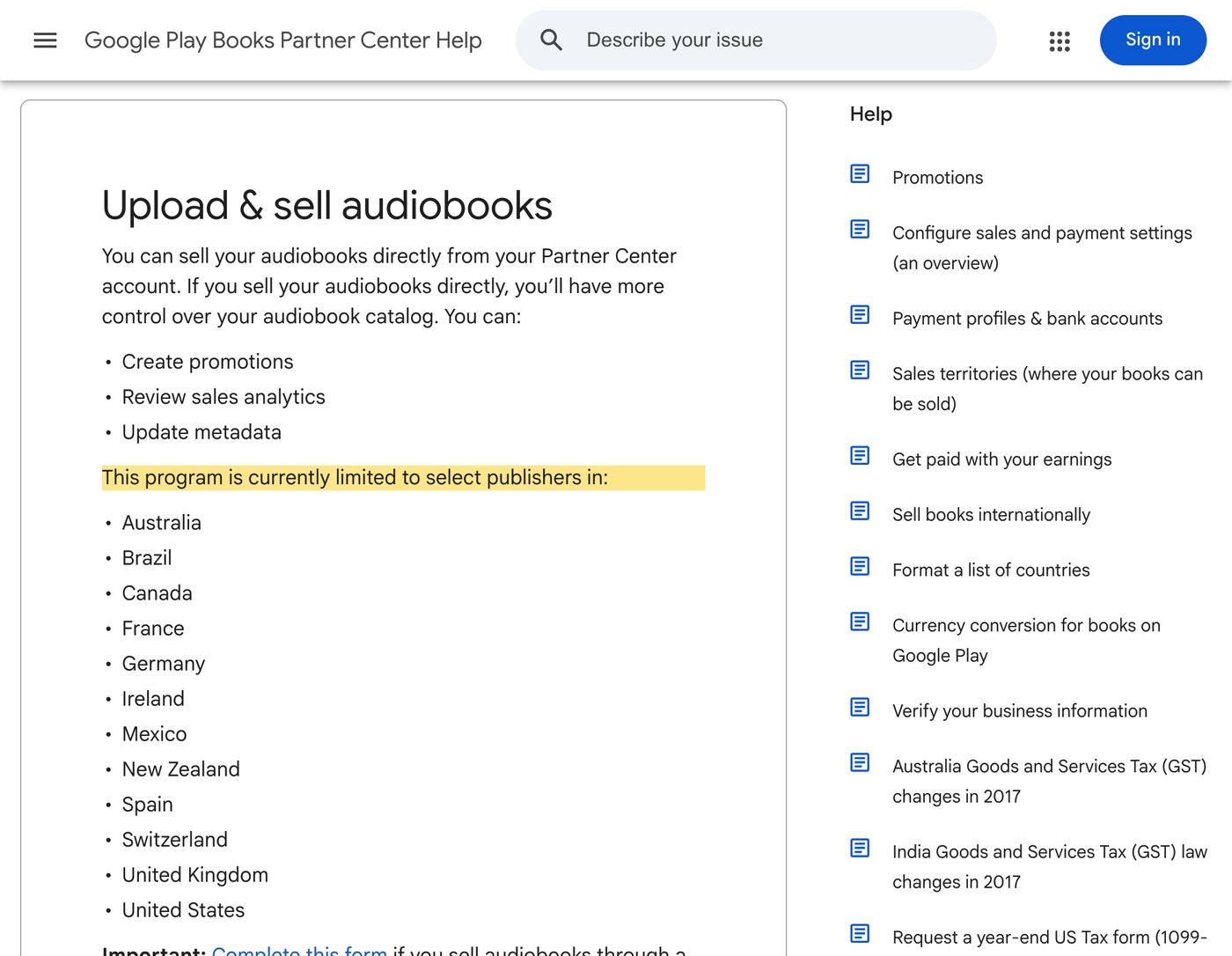
What you earn: you set a list price, and Google shows your share for each country in the Partner Center. Google does not publish one figure for uploaded audiobooks.
AI narration: accepted. When you add the narrator, choose “Synthesized voice”. Google’s policies do ban “low-quality, unclear machine-read audio”, so quality matters.
Best for: Android listeners and international reach.
Read the full guide: How to publish an audiobook on Google Play.
4. Apple Books
Apple Books comes on every iPhone, which makes it a strong store for audiobooks. Unlike ebooks, you can’t upload an audiobook to Apple yourself. Apple asks you to go through one of its partners or another distributor.

What you earn: Apple pays your distributor a wholesale share, and the distributor pays you. PublishDrive, for example, passes on Apple’s 45% and charges a monthly fee instead of a cut.
AI narration: accepted with disclosure. Apple’s audiobook guidelines say AI narration “must explicitly state this in either the title or narrator field” and in the description. Apple also has its own free digital narration for some ebooks.
Best for: iPhone listeners, and authors who already sell ebooks on Apple.
Read the full guide: How to publish an audiobook on Apple Books.
5. Kobo
Kobo is big in Canada, Australia and Europe, and it reaches over 200 countries. You publish through Kobo Writing Life, which is free. The audiobook upload tool is not on every account yet, so you may need to email Kobo to switch it on.
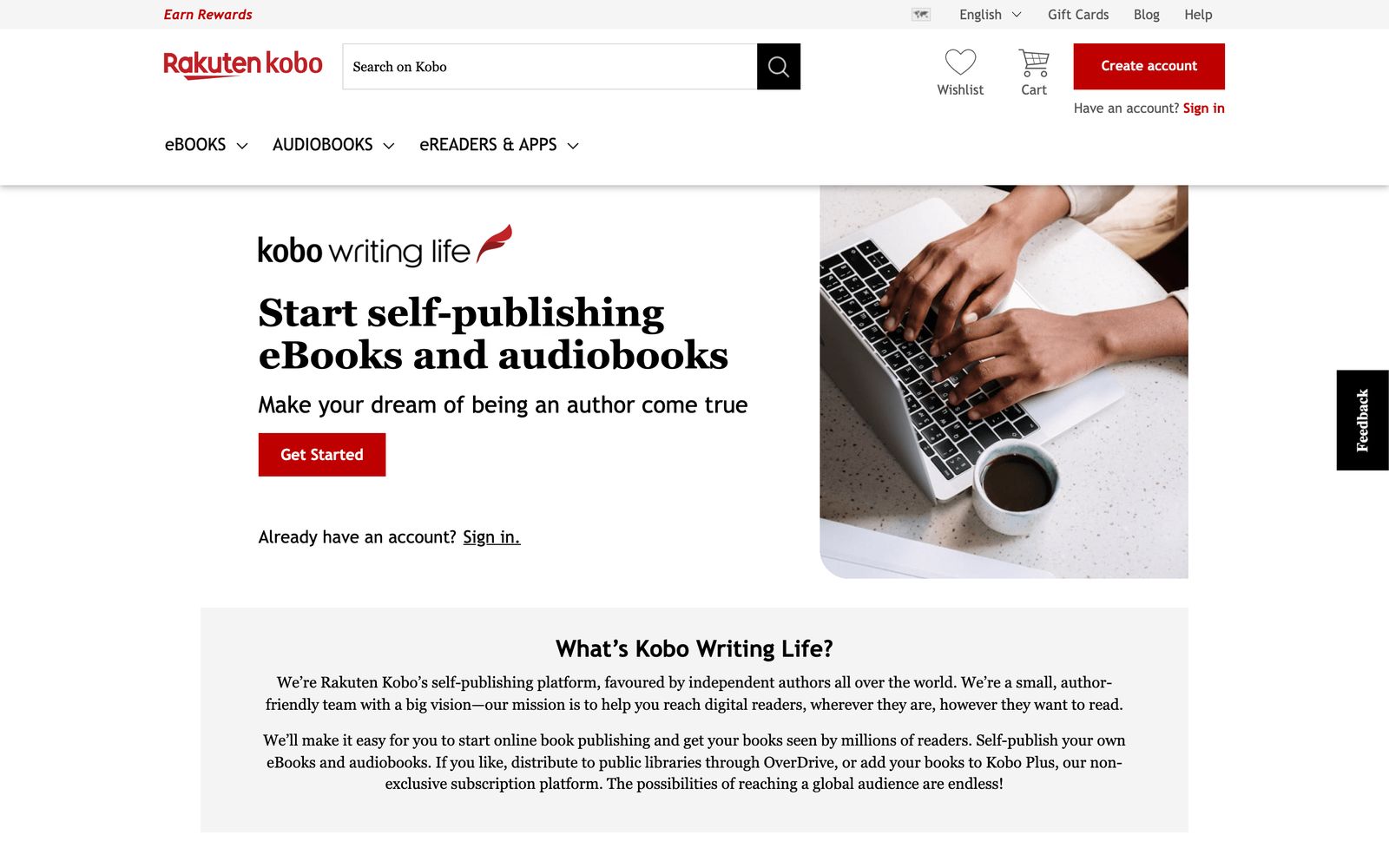
What you earn: 45% of your list price at $2.99 or more, 35% below that. Every Kobo audiobook is also in its audio subscription, which pays per listen.
AI narration: accepted. List the narrator as “Synthesized Voice” and mention it in your description.
Best for: readers outside the US, and authors who want a simple, non-exclusive store.
Read the full guide: How to publish an audiobook on Kobo.
6. Gumroad
Gumroad lets you sell your audiobook straight to readers from a simple product page. There is no monthly fee and no store to build, which makes it the fastest way to start selling direct.
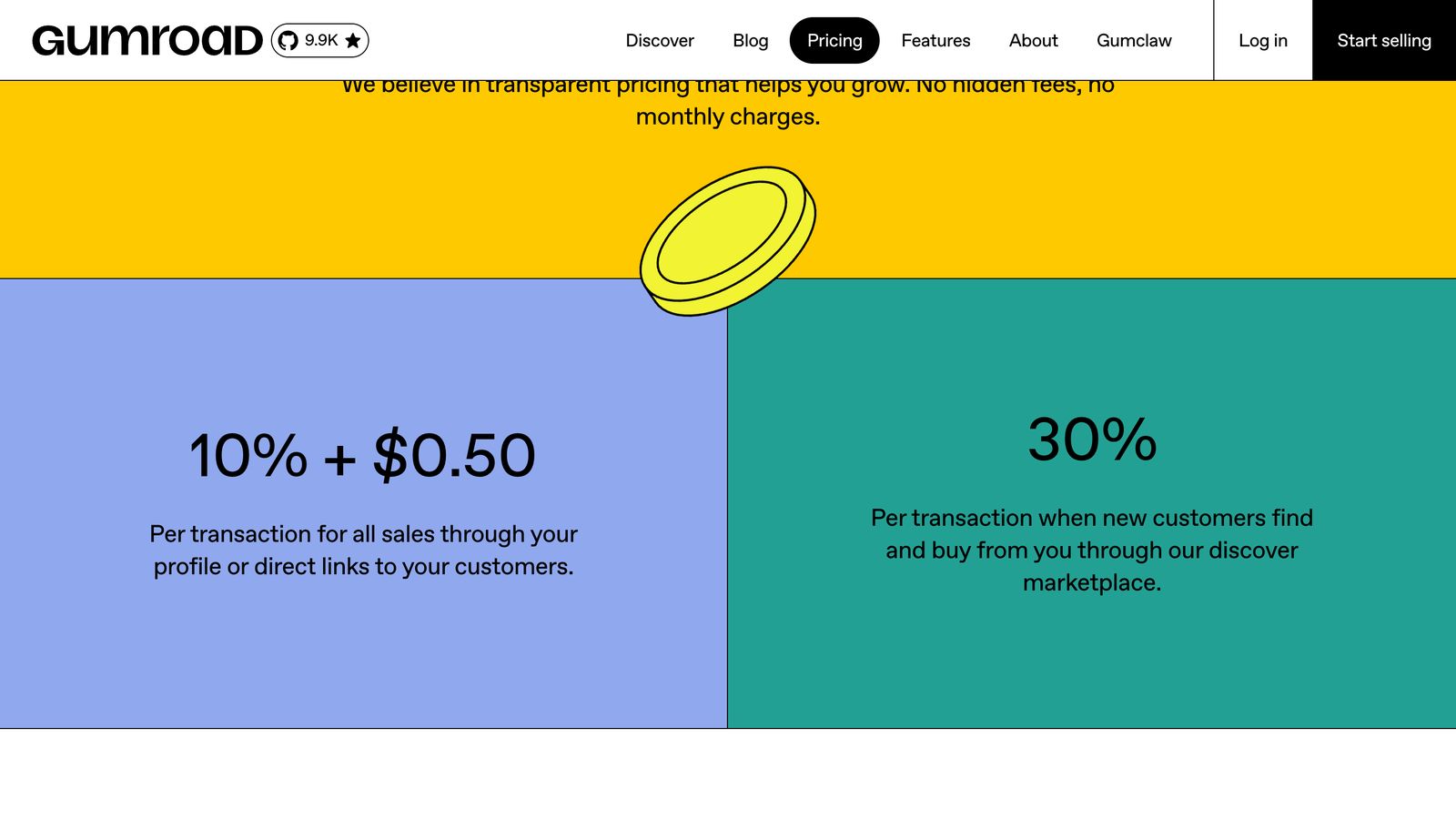
What you earn: your price minus 10% + $0.50 and card processing. Gumroad is the merchant of record, so it handles sales tax and VAT for you.
AI narration: no narration rules. It’s your product and your page.
Best for: authors with a newsletter or social following who want to start selling today.
Read the full guide: How to sell audiobooks on Gumroad.
7. Shopify
Shopify is the right choice if you want a full author store with your own domain, bundles of ebooks, audiobooks and print books, and your own design. You add audiobooks with Shopify’s free Digital Products app.
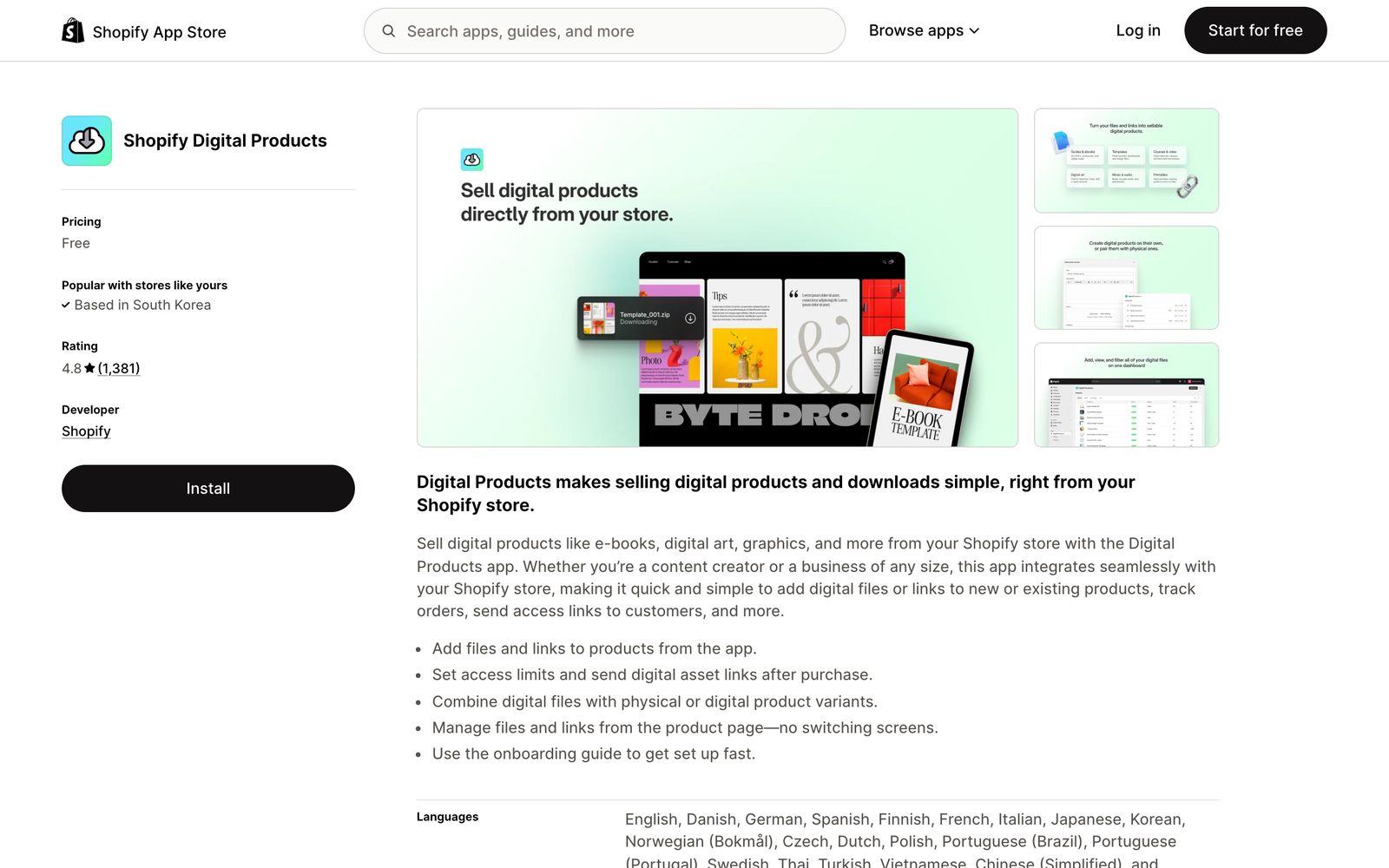
What you earn: your full price, minus your monthly plan and card fees. You are the seller, so you handle tax registration yourself.
AI narration: no narration rules.
Best for: authors who sell a lot direct, or already have a Shopify store.
Read the full guide: How to sell audiobooks on Shopify.
8. Payhip
Payhip sits between Gumroad and Shopify. It gives you a real store and audio previews on your sales pages, with a free plan that takes 5% per sale and paid plans that take less or nothing.

What you earn: 95% on the free plan, 98% on Plus ($29 a month) or 100% on Pro ($99 a month), minus card fees. Payhip collects EU and UK VAT for you, and since July 2026, US and Canadian sales tax too.
AI narration: no narration rules.
Best for: authors who want a store with audio previews and tax handled, without Shopify’s monthly cost.
Read the full guide: How to sell audiobooks on Payhip.
Or reach them all at once: distributors
A distributor sends your audiobook to many stores and libraries from one upload, and takes a share or a fee for doing it.
- Voices by INaudio (formerly Findaway Voices) reaches retail stores, subscriptions and libraries, and keeps 20% of what the stores pay. For AI narration, it only accepts files made with Google Play Books, ElevenLabs or Spoken Press.
- PublishDrive delivers audiobooks to Apple Books, Google Play, Kobo, Spotify, OverDrive and others for a monthly fee, with no cut of sales. Its own guide says most of those stores accept AI narration when it’s disclosed, but not Audible.
- Author’s Republic reaches 50+ stores and libraries and keeps 20%. It is testing AI-narrated audiobooks, which not every store accepts.

A distributor saves time, but you earn a little less per sale and give up some control. Many authors upload directly to the stores that make it easy (Spotify, Kobo, Google Play) and use a distributor only for the rest, such as Apple Books and libraries.
How to sell your audiobook in 5 steps
- Get store-ready files. Most stores ask for one MP3 file per chapter at 192 kbps or more, opening and closing credits, a retail sample of up to five minutes, and a square cover. Make the cover 3000 × 3000 pixels, the size Apple asks for, and it will work everywhere.
- Decide between wide and exclusive. Audible’s exclusive option pays more on Audible but stops you selling anywhere else for seven years. Most indie authors choose wide: several stores at once, plus their own shop.
- Set your price. Look at similar audiobooks in your genre and length. On your own shop, you choose the price. Audible sets its own, and Spotify and Google take your price as a suggestion.
- Upload and disclose AI narration. Fill in the title, author, narrator, description and categories the same way on every store. If the narration is AI, say so in the narrator field and the description, as each store asks.
- Sell direct too. Put your audiobook on Gumroad, Shopify or Payhip, then link to it from your website, your ebook’s back pages and your newsletter. Direct sales pay the most and tell you who your listeners are.
Which places should you choose?
- Your audiobook is human-narrated: start with Audible (exclusive or not), then add the rest if you go wide.
- Your audiobook is AI-narrated: start with Spotify, Kobo and Google Play, add Apple through a distributor, and sell direct on your own shop.
- You have a mailing list: sell direct first. A small list buying at full price often earns more than a store listing.
- You want the least work: Spotify for Authors plus one direct shop covers a lot of listeners in an afternoon.
FAQ
Where can I sell my audiobook?
You can sell it on Audible (through ACX), Spotify (through Spotify for Authors), Google Play Books, Apple Books (through a distributor) and Kobo (through Kobo Writing Life), and directly from your own shop on Gumroad, Shopify or Payhip. Most authors use several at once.
Can I sell an AI-narrated audiobook?
Yes, on most stores. Spotify, Google Play Books, Kobo and Apple Books accept AI narration when you disclose it. Audible’s ACX does not accept it from indie authors, except through Amazon’s own Virtual Voice program. Your own shop has no narration rules.
Do I need an ISBN for an audiobook?
Not everywhere. Spotify doesn’t require one, Kobo and Google Play can give you a free identifier, and ACX uses your ebook’s listing. Some distributors need a 13-digit ISBN for Apple and Google.
Should I go exclusive with Audible?
Only if most of your readers are on Audible and you don’t plan to sell anywhere else. Exclusive pays 50% instead of 30% and lasts seven years, but you can’t sell on Spotify, Kobo, Google Play or your own site during that time.
How much do audiobook stores pay?
Audible pays 50% exclusive or 30% non-exclusive. Spotify pays 50% of your price on sales, plus a share of Premium listening. Kobo pays 45% at $2.99 or more. Through a distributor, you usually get about 80% of what the store pays. Your own shop keeps the most: about 82% of a $15 sale on Gumroad after all fees, or 95% to 100% on Payhip before card fees.
How should I price my audiobook?
Price by length and genre. As a guide, Audible’s own price ranges in 2026 run from about $13 to $25 for a 10 to 20 hour book. On your own shop you can price lower than the big stores and still earn more per sale.
Can I sell my audiobook in more than one place?
Yes. Every store here is non-exclusive except Audible’s exclusive option. Keep your title, cover and description the same everywhere so listeners know it’s the same book.
Ready to make your audiobook?
The store you choose shapes how you make your audiobook, so decide where you’ll sell first. If AI narration fits your plan, our AI audiobook generator makes store-ready files with a voice for every character, and your first chapter is free.
Philip Ghezelbash is the founder of Audiobook Generator and the author of The Stoic Body, which has sold over 10,000 copies on Amazon. He writes about making, publishing and selling audiobooks.
Keep reading
How to Sell Audiobooks on Shopify
Turn your Shopify store into an audiobook shop: the free Digital Products app, file limits, delivery, tax and the apps worth knowing.
Philip Ghezelbash··7 min read
How to Sell Audiobooks on Payhip
A simple store for your audiobook with audio previews and tax handled: setup, files, pricing and fees, step by step.
Philip Ghezelbash··7 min read
How to Sell Audiobooks on Gumroad
Sell your audiobook straight to readers from a Gumroad page: setup, files, pricing, fees and tax, step by step.
Philip Ghezelbash··7 min read